Namesake
Background
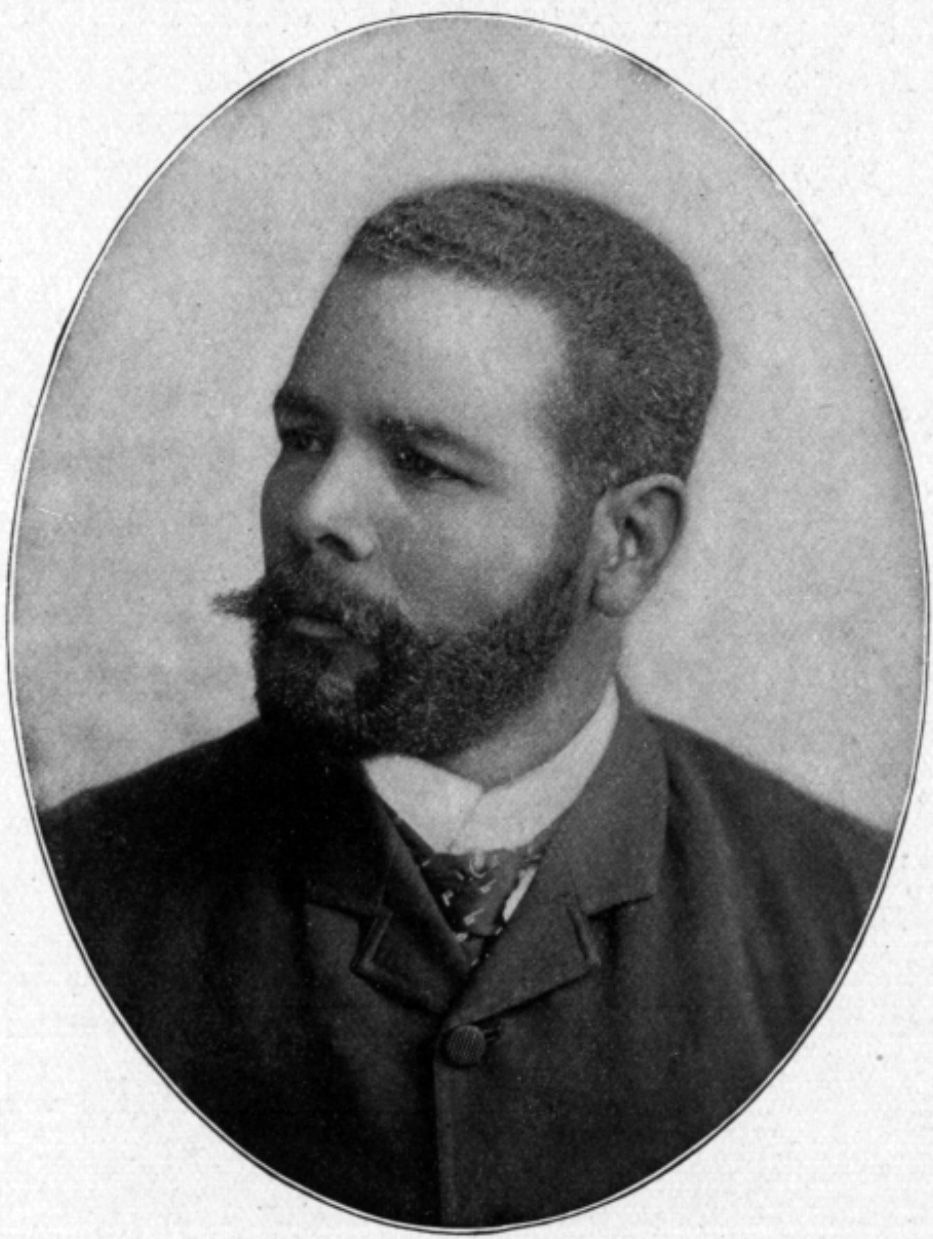
Antonio de la Caridad Maceo y Grajales was born on 14 June 1845 in Santiago de Cuba.4 His father, Marcos Maceo, was a Venezuelan émigré. His mother, Mariana Grajales, was a free Black Cuban woman remembered as one of the outstanding women in her country’s history.14 She sent her sons to the war and buried most of them.
He was born free in a colony built on slavery. That contradiction, held from birth, is the whole of the man.
The Spanish called him the Bronze Titan. It was a name about the colour of his skin, and he made them say it as a title.2
Masonry for all
Antonio Maceo could not join his godfather’s lodge. Asencio, the Santiago lawyer who stood for him, was a Mason of the Gran Logia de Colón, and he gave the boy the Masonic ethic without ever bringing him inside, because the obedience he belonged to did not admit men of colour.5
The Masonry that would have him had been founded for exactly that reason. The Gran Oriente de Cuba y las Antillas opened in March 1862 and “opened its doors to all men, making no social or racial distinction.”6 It became the organisation the 1868 rising was built on.
His military experience
Cuba rose against Spain on 10 October 1868. Maceo enlisted as a private soldier.13
He was a captain within months and a lieutenant colonel by January 1869.4 Within five years he was a general, promoted “because of his bravery and his demonstrated ability to outmaneuver the Spanish army.”1 He rose to second-in-command of the Cuban army of independence, and history counts him among the outstanding guerrilla leaders of nineteenth-century Latin America.12
Baraguá
By 1878 most Cuban commanders believed the war was lost, and the Pact of Zanjón ended it on Spain’s promise of reform.1 Maceo refused to sign it. On 15 March 1878, at Baraguá, he faced the Spanish general Martínez Campos and said the fight would go on.4
What he refused matters more than that he refused. He would not surrender “without winning Cuban independence and the abolition of slavery.”2 Every other commander had accepted a peace that left men enslaved. He would not, and he said so with almost no army left to say it with.
Baraguá is why he is remembered as more than a soldier. A general who wins a battle has won a battle. A man who turns down the end of a war because the terms leave other men in chains has said something about what he thinks a country is for. That is the reason his name is worth carrying, and it is the reason it is on our door.
Final days
After the failed Little War of 1879, Spain kept him in exile, away from Cuba for fear of what his return would mean.4 He came back in April 1895 and, with Máximo Gómez, carried the war out of the eastern provinces and into the west, leading operations as far as Pinar del Río, the end of the island Spain believed it held securely.3
Maceo spent the autumn of 1896 in Pinar del Río, at the far western end of the island, cut off from the main body of the Cuban army by a fortified Spanish line.
Spanish forces ambushed and killed him at San Pedro, in Havana province, on 7 December 1896, as he moved east to rejoin Gómez.34 Francisco Gómez Toro, Máximo Gómez’s son, died beside him.
He did not live to see the republic. He had spent nearly thirty years making it possible. In Cuba the day of his death is still marked.
Prince Hall Freemasonry
Prince Hall Freemasonry began in 1784, when Prince Hall and fourteen other free Black men received a charter and founded African Lodge in Boston, because the lodges around them would not have them.
In the District of Columbia
It reached Washington within a generation. On 22 November 1822, John W. Prout called a meeting at his house to organise a lodge, and free Black men of the District petitioned the African Grand Lodge of North America in Philadelphia for a warrant.7 The record names the lodge that followed, Social Lodge No. 7, the first African Masonic order south of the Mason-Dixon line. In 1848 it joined with two other lodges to form the Union Grand Lodge, which later took the Prince Hall name.8
Our Grand Lodge
Antonio Maceo Lodge No. 30 is a subordinate lodge of the Most Worshipful Prince Hall Grand Lodge of the District of Columbia. Its history is longer than ours and it is told properly on the Grand Lodge’s own pages: mwphgldc.com/history.
The Grand Lodge sits at the Prince Hall Masonic Temple, 1000 U Street NW, designed by the architect Albert I. Cassell and built between 1922 and 1929.9 It is one block from the corner that carried Black Washington’s music, business and politics through the twentieth century.
Our Lodge
In the spring of 2024, Brothers began to assemble the Lodge under dispensation as Antonio Maceo UD, raising new Master Masons, mainly of Latino origin. The Honorable Glenn N. Ruffin, Most Worshipful Grand Master of the Most Worshipful Prince Hall Grand Lodge of the District of Columbia, and Brother Francisco Martinez of John F. Cook Lodge No. 10 saw the need and had the vision to organize this Lodge, and made it happen.
Antonio Maceo Lodge No. 30 (Logia Antonio Maceo Número Treinta) received its charter on 29 March 2025 as the first Latino lodge of the Most Worshipful Prince Hall Grand Lodge of the District of Columbia.
The officers of the Lodge, from the charter to today, are recorded on their own page.
This is why the Lodge carries his name. Not because he was a great soldier who happened to be a Mason, but because he had to go looking for a Masonry that would have him, and the one that would was the one that made a revolution.
Boston in 1784. Santiago in 1862. Washington today. Three times, in three countries, the lodges already standing would not admit these men, so a different Masonry did, and it was the one that changed something. That is the inheritance, and it is not a metaphor.
Timeline
- 1784Prince Hall and fourteen free Black men found African Lodge in Boston.
- 1822John W. Prout calls a meeting in Washington to organise a lodge, 22 November.
- 1845Antonio Maceo is born free in Santiago de Cuba, 14 June.
- 1848Three Washington lodges join to form the Union Grand Lodge.
- 1862The Gran Oriente de Cuba y las Antillas opens in March, admitting men of every colour.
- 1868Cuba rises against Spain on 10 October. Maceo enlists as a private soldier.
- 1878At Baraguá on 15 March, he refuses a peace that leaves slavery standing.
- 1895He returns from exile in April and carries the war west.
- 1896He is killed at San Pedro on 7 December, two years before the republic.
- 1922Work begins on the Prince Hall Masonic Temple at 1000 U Street NW, the home of the Grand Lodge. It is finished in 1929.
- 2024Brothers begin to assemble the Lodge under dispensation, as Antonio Maceo UD.
- 2025Antonio Maceo Lodge No. 30 receives its charter on 29 March 2025.
References
- Encyclopaedia Britannica, “Antonio Maceo.”
- Library of Congress, The World of 1898: Antonio Maceo.
- Smithsonian Institution, 1898: U.S. Imperial Visions and Revisions, Antonio Maceo (1845–1896).
- Encyclopedia.com, “Antonio Maceo.”
- Fernández Carcassés, Manuel. “Noticias acerca de la niñez y la juventud de Antonio Maceo.” Santiago 122, Universidad de Oriente. On Asencio, the Gran Logia de Colón and the colour bar, citing Candelario Hernández Larrondo, Bohemia 50, 15 December 1967.
- Duany Destrade, Lídice. “En torno a la cosmovisión de Antonio Maceo Grajales. Factores concurrentes en su formación.” Contribuciones a las Ciencias Sociales, September 2011. On the Gran Oriente de Cuba y las Antillas.
- Most Worshipful Prince Hall Grand Lodge of the District of Columbia, History: The Early Years.
- Historical Marker Database, Most Worshipful Prince Hall Grand Lodge of the District of Columbia. On Social Lodge No. 7 and the 1848 Union Grand Lodge.
- Wikipedia, Prince Hall Masonic Temple (Washington, D.C.).
- Foner, Philip S. Antonio Maceo: The “Bronze Titan” of Cuba’s Struggle for Independence. New York: Monthly Review Press, 1977. The standard English-language biography.
- Ferrer, Ada. Insurgent Cuba: Race, Nation, and Revolution, 1868–1898. Chapel Hill: University of North Carolina Press, 1999. On how Black and mulatto Cubans made the independence movement, and what it cost them.
- Pérez, Louis A., Jr. Cuba Between Empires, 1878–1902. Pittsburgh: University of Pittsburgh Press, 1983.
Sources differ on the year he made general: one gives 1872, another five years after 1868. Both are shown here as within five years. Sources also disagree about his initiation. A widely repeated reference line has him entering a Santiago lodge in 1864; the Cuban scholarship above contradicts it, and no source here documents when or where he was actually raised. This page says what is defensible and no more.
Elsewhere in the Lodge: Officers · Contact · OES · Awards · Photos · Donate · Community
Antonio Maceo Lodge No. 30